
27Oct
How to Read a Dog Food Label: An Analyst’s 5-Step Guide to AAFCO Rules & Ingredients
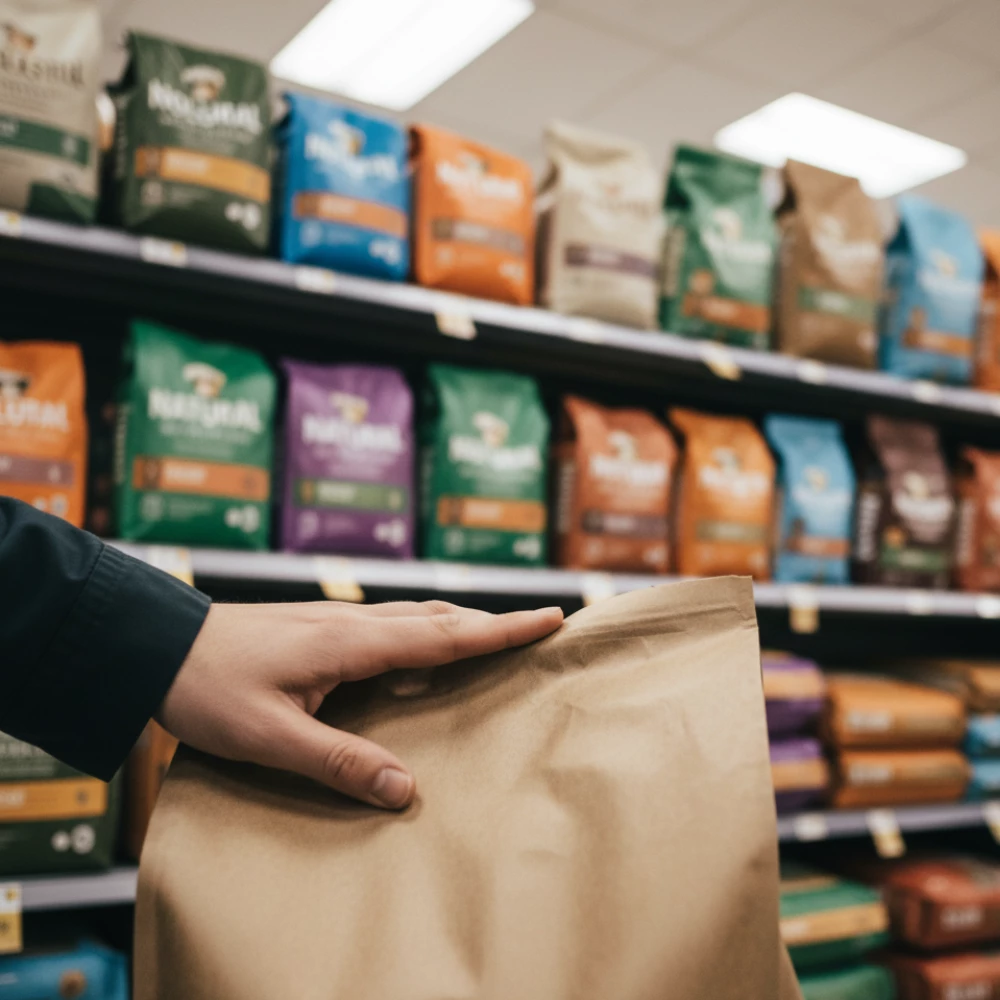
A dog food label is not a menu; it is a legally binding document. It's often designed to be confusing, using marketing words like “premium,” “holistic,” “natural,” or “ancestral” that have little to no legal or data-driven definition.
This is where data analysis becomes critical. To find the truth about your dog's food, you must ignore the marketing claims on the front of the bag and analyze the data on the back.

At Kibble and Coverage, we don't just “read” labels; we analyze them. We've broken down our E-E-A-T (Expertise, Authoritativeness, Trust) process into a 5-step guide. Here is how you can analyze any kibble label like a data professional.
1. Analyze the AAFCO Statement (The Nutritional Adequacy Statement)
This is the single most important data point on the entire bag. Look in the fine print for a statement that says the food is “formulated to meet the nutritional levels established by the AAFCO Dog Food Nutrient Profiles…”
This verifies the food is “complete and balanced.” But the key data is which profile it meets:
- “All Life Stages”: This food is formulated for the highest nutritional need: growth (puppies). This means it has higher minimum levels of protein, fat, and calories. It is suitable for puppies and most healthy adults.
- “Adult Maintenance”: This food is formulated only for adult dogs. Our analysis shows it is not nutritionally adequate for the high-energy demands of a growing puppy.
If a label says the food is “for intermittent or supplemental feeding only,” it is not a complete meal and should not be used as your dog's primary food source.

2. Analyze the “Naming Rules” (The 95%, 25%, 3% Rule)
The product name itself is a data point governed by AAFCO. The words used tell you the minimum percentage of the named ingredient (by weight, not counting water).
- The 95% Rule (e.g., “Chicken Dog Food”): If the name is just the ingredient, it must contain 95% of that ingredient. You will almost never see this on a dry kibble bag; it's almost exclusively for single-ingredient canned foods.
- The 25% Rule (e.g., “Chicken Dinner,” “Platter,” “Entree”): These “qualifier” words are a key data point. They mean the product must contain at least 25% of the named ingredient. This is very common.
- The 3% Rule (e.g., “Dog Food with Chicken”): The word “with” is a critical identifier. It means the product is only required to contain 3% of that ingredient.
- The “Flavor” Rule (e.g., “Chicken Flavor Dog Food”): This means the product contains less than 3% (often 0%) of the ingredient, only enough to be detected as a flavor.
3. Analyze the First 5 Ingredients (Weight & Water)
Ingredients are listed by pre-processing weight. Therefore, the first 5 ingredients represent the vast majority of the food's formulation. This is where we must analyze the difference between “meat” and “meat meal.”
- “Chicken” (Whole Meat): This is a high-quality ingredient, but it contains approximately 75% water by weight.
- “Chicken Meal” (Rendered Meat): This is not a “bad” ingredient. It is a highly concentrated protein source. “Meal” means the water and fat have already been rendered out.
Analysis: A pound of “chicken meal” contains significantly more animal protein than a pound of “chicken.” Our data shows the strongest ingredient panels often feature a concentrated “meal” as the first ingredient (e.g., “Chicken Meal, Brown Rice…”).
If the only meat source is “Chicken” and it's followed by 3-4 carbohydrate sources (e.g., “Chicken, Ground Corn, Wheat Middlings…”), the data shows that the actual protein contribution from the meat is much lower after the water is cooked out.
4. Analyze Controversial Ingredients (Fillers & Preservatives)
This part of the analysis must be objective. These ingredients are included for a functional purpose, and you must decide if that function is acceptable.
- “Fillers” (Corn, Wheat, Soy): From a data perspective, these are not “fillers” in the sense of being “useless.” They are sources of carbohydrates (for energy), fiber, and plant-based protein. The analytical concerns are:
- They are common allergens for a small percentage of dogs.
- If they appear before the primary meat (e.g., “Ground Corn, Chicken Meal…”), you are paying for a corn-based food, not a meat-based one.
- Artificial Preservatives (BHA, BHT, Ethoxyquin): These are chemical preservatives approved for use at low levels to give kibble its long, stable shelf life. However, a key data point for “premium” brands is the use of “natural” preservatives instead (e.g., “mixed tocopherols,” which is Vitamin E, or rosemary extract).
5. Analyze the “Guaranteed Analysis” (The Nutrient Percentages)
This is the “nutrition facts” panel. It lists the minimums and maximums for the four key nutrients.
- Crude Protein (Min): This is the most-watched number. For “Adult Maintenance,” this is often 22-26%. For “All Life Stages” or “Performance,” data shows this is higher (28-32%+).
- Crude Fat (Min): Fat is energy. A low-fat diet is typically 9-12%, while a high-performance diet can be 18-22%.
- Crude Fiber (Max): A higher fiber content (e.g., >5%) is often seen in “weight management” formulas.
- Moisture (Max): For kibble, this will always be low (10-12%).
Note: You cannot directly compare the protein percentage of a dry kibble (10% moisture) to a canned food (75% moisture). The data must be converted to a “dry matter basis” first.

Conclusion: You Are Now the Analyst
You now have the 5-step framework our team uses to analyze any kibble on the market.
By looking past the marketing slogans and analyzing the AAFCO statement, the naming rules, the first 5 ingredients, the preservative type, and the Guaranteed Analysis, you can objectively determine the quality and value of any food.

The best way to build this skill is to practice. We recommend applying your new knowledge by browsing the premium kibble selection on Chewy, where hundreds of legally-required labels are available for you to analyze right from your desk.
[ Browse Premium Kibble on Chewy ]
- Brain Training for Dogs Review 2026: Does It Really Work?

- Best Dog Joint Supplements for Senior Dogs (2026 Guide)

- Multi-Dog Household Masterclass: How to Train Several Dogs as One Team

- How to Read a Pet Food Label: A Complete Guide for Dog & Cat Owners
- Stop Dog Hair Loss & Scratching: The Biotin + Omega 3 Fix
